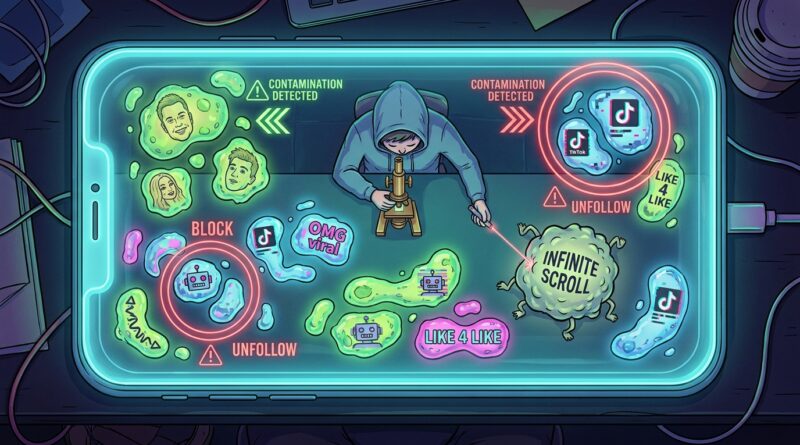
Homo Slop‑Savvy: When Humans Evolved To Detect AI Junk Faster Than Their Own Thoughts
You know the feeling. Three minutes into scrolling, your brain starts to taste like packing peanuts. A celebrity face is melting in a thumbnail. A podcast clip has that weird not-quite-human cadence. A TikTok recipe appears to have been written by a haunted autocomplete. None of it is quite real, none of it is quite useful, and somehow it still ate your attention anyway. That is the annoying part. Not just that AI slop exists, but that it keeps lowering the bar for what counts as normal information while your curiosity quietly goes flat. If you have caught yourself thinking, “Am I becoming excellent at recognizing junk only after it has already entered my eyeballs,” congratulations. You are adapting to the age of synthetic sludge. The good news is that you can get better at spotting it fast, resisting it on purpose, and keeping your brain from becoming a content landfill.
⚡ In a Hurry? Key Takeaways
- AI slop is cheap, endless, emotionally sticky content made to capture attention, not to inform you well.
- Use a simple filter. Ask who made it, why it exists, and whether it says anything a real person would bother to stand behind.
- If you let machine-made junk set your baseline, you start confusing engagement with truth, which is great for platforms and terrible for your brain.
First, let us define the goo
“AI slop” sounds like a joke, and it is, but it is also useful. It describes the flood of low-effort machine-generated stuff that exists because making it is now almost free. Images with six-fingered hands. Fake quotes over fake photos. Frankenpodcasts stitched from scraped audio. Auto-written listicles that say nothing. Meme pages vomiting out ten versions of the same joke until language itself asks for a sick day.
This is why the phrase ai slop satire human evolution lands. It feels like we are developing a survival trait. Not wisdom, exactly. More like the ability to smell digital spoilage before reading the second sentence.
The trouble is that detection alone is not enough. You can recognize junk and still consume junk. Most of us do.
The real problem is not quality. It is normalization.
Bad content has always existed. Spam is older than many college students. What changed is volume, speed, and the fact that slop now arrives dressed as culture. It looks like content. It behaves like content. It gets likes, views, stitches, clips, reposts, and reaction faces. That social proof makes it feel more legitimate than it is.
After a while, your brain starts adjusting to the new baseline. You expect summaries instead of ideas. Vibes instead of facts. Confidence instead of accuracy. You stop asking, “Is this good?” and start asking, “Is this what everybody is seeing?”
That is how a culture gets trained to confuse engagement for truth.
The anatomy of AI slop
It is frictionless to make
A real essay takes time. A real joke usually comes from an actual observation. A real interview involves reporting, editing, and someone willing to put their name on it. Slop skips all that. The point is not care. The point is output.
It is optimized to trigger, not satisfy
Slop is the snack that never becomes a meal. It gives you novelty, outrage, weirdness, or false usefulness in tiny hits. Then it leaves you emptier than before, ready for the next hit.
It copies the shape of human work
This is why it is annoying instead of merely silly. Slop often looks almost right. Almost funny. Almost informative. Almost moving. It is the uncanny valley of meaning.
It works because you are tired
If this sounds familiar, it pairs nicely with Homo Ad‑Block‑Immune: When Humans Evolved To Worship Algorithmic Garbage As Sacred Content. The point is not that you are weak. The point is that modern feeds are built to catch you when your attention is low and your guard is down.
How to spot AI junk faster than your own thoughts
You do not need a forensic lab. You need a few repeatable checks.
1. Listen for smooth nonsense
AI slop often sounds polished while saying almost nothing. Lots of certainty. Little substance. It is strangely fluent and weirdly empty at the same time.
If a video, post, or article seems to glide past specifics, examples, dates, names, or anything a person might actually verify, be suspicious.
2. Watch for emotional bait with no human stake
“This will blow your mind.” “Nobody is talking about this.” “The internet is in shock.” Fine. Who is talking? Who is shocked? Where is the original source?
Slop loves big feeling with no ownership.
3. Check whether the creator is a person or a content faucet
Tap the profile. Is it posting twenty times a day across five unrelated topics? Does every post feel assembled from trending scraps? Does the bio look like it was generated by a machine trying to sell productivity supplements to a raccoon?
That is your clue.
4. Look for visual weirdness
Yes, the classic tells still matter. Hands. Teeth. Text inside images that looks cursed. Lighting that obeys no earthly sun. Background objects merging into each other like a dream you should not trust.
But remember, visual mistakes are becoming less obvious. Do not rely on weird fingers alone.
5. Ask the simplest question of all
Would a knowledgeable human proudly claim this as their work?
If the answer feels like “probably not,” move on.
Your practical anti-slop survival manual
Create speed bumps
The feed wants instant reaction. Add one second of resistance. Before you like, share, save, or send, ask: “Did this teach me anything, or did it just poke me?” Tiny pause. Big difference.
Curate for humans, not volume
Follow fewer accounts that make better things. Writers with bylines. Artists with process videos. Podcasters who cite sources. Niche weirdos who know too much about one topic. Human fingerprints matter.
Use the rule of two clicks
If a claim matters, click twice. Once to the profile. Once to the source. Most slop collapses under two clicks.
Keep a small list of trusted places
When everything in the feed starts blending together, having a few reliable newsletters, sites, YouTube channels, or creators is like keeping bottled water during a flood.
Do not outsource taste to the algorithm
If you only consume what the feed serves, the feed becomes your editor, critic, librarian, and village idiot all at once. That is too much power for an app that also thinks you want twelve more videos of fake courtroom drama.
Share the phrase out loud
“This is slop” is useful social language. It helps people name the feeling instead of just enduring it. Humor helps too. If you can laugh at the sludge, you are less likely to worship it.
Why this matters more than one annoying meme page
The danger is not just personal distraction. It is cultural drift.
When synthetic junk floods the zone, it changes expectations. Schools, workplaces, friend groups, even family chats start accepting thinner, faster, more disposable information as normal. People stop noticing when quality disappears because the replacement is good enough to pass at a glance.
That is a bad trade. Curiosity needs texture. Judgment needs friction. Thinking needs time.
Without those things, you do not get an informed public. You get a population that is highly trained to react.
What to do when you catch yourself eating the slop anyway
Be nice to yourself. Seriously.
This stuff is built to be consumed in moments when you are bored, lonely, fried, procrastinating, or just trying not to think too hard after dinner. The goal is not purity. The goal is awareness.
Try this reset. Close the app. Read one page of something written by a real person who cares. Watch one video made by someone with actual expertise. Text one friend a recommendation that is not algorithm sludge. That is how you rebuild taste. Small reps.
At a Glance: Comparison
| Feature/Aspect | Details | Verdict |
|---|---|---|
| AI slop | Fast to make, emotionally sticky, often vague, designed for clicks and endless reposting | Fine as background noise, terrible as an information diet |
| Human-made content | Has point of view, accountability, context, and usually some sign that a person actually cared | Worth seeking out, even when it is slower and less shiny |
| Your best defense | Pause, check the source, favor creators over content mills, and keep trusted alternatives handy | Most effective if you make it a habit before you are tired and scrolling on autopilot |
Conclusion
You do not need to become a digital monk or throw your phone into a river. You just need a working nose for sludge and a little stubbornness about what gets to live in your head. AI slop and auto generated memes are quietly setting the baseline for what people think is “normal” information, which is exactly how you end up with a culture that confuses engagement for truth. The fix starts small. Notice it. Name it. Skip it more often. Trade it for work made by actual humans with actual taste and some skin in the game. That keeps a bit of cognitive sovereignty intact while everything around you is being auto-filled by machines. It also gives you and everyone else a shared language for calling out the junk, swapping better alternatives, and laughing at your own occasional goblin-scroll habits instead of just adapting to the feed like a boiled frog with Wi-Fi.